


Happy Saturday!!
This week’s newsletter is a bit different. I had the absolute pleasure and maybe even my peak career moment to date, of interviewing award-winning chef and NYTimes contributor Hetty Lui McKinnon.
Today, I’m sharing our chat, along with her recipe for Dumpling Tomato Salad With Chile Crisp Vinaigrette, that she has graciously offered to gift to you!
(recipe is linked at the end along with some notes from me).
It comes together in actually 20 minutes - and it’s the exact hot & cold & textural contrast that I love so much. I know you’re gonna love it too!

During our chat, what struck me most is how much of Hetty’s cooking philosophy resonates with me (albeit mine is definitely the junior version - I’ve got some dues to pay before I can compare myself to a pro like Hetty). We’re both self-taught, and both made sudden, somewhat unexpected career pivots. She talks about how not having formal training can actually be more freeing when developing recipes. That recipes should invite play instead of pressure. And that a good shortcut can be just as worthy as “from scratch.”
That’s exactly the kind of cooking I believe in: food that feels fun, flexible, and delicious without the pressure.
We talked about everything from grief and identity to viral dumpling salads, and why letting go of the “rules” might just make us better cooks.
So grab a coffee, kick up your feed, and take a read. I hope you love it as much as I did.
And if you’d like to learn more about Hetty, check out her:
Website: hettymckinnon.com
Instagram: @hettymckinnon
Newsletter: To Vegetables, With Love
Cookbooks:
NEW Fall 2025: Linger (Pre-order here)
About Hetty
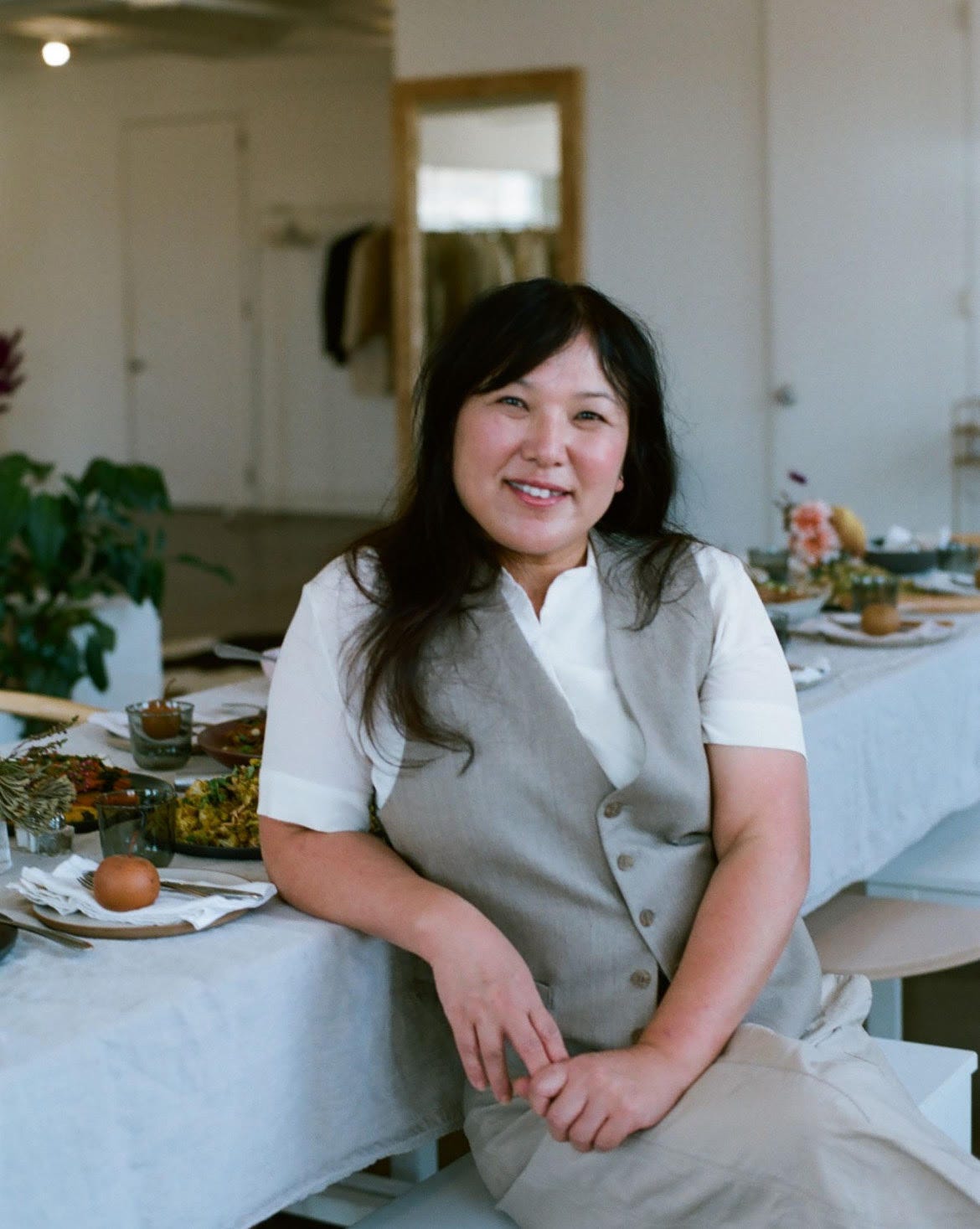
Hetty, you went from beauty PR - “hanging out with supermodels on leaky boats in Peru” - to making 100 salads a week in your home kitchen which you called “Arthur Street Kitchen”. Can you take me back to the exact moment you knew you had to leave that world behind and dive head first into food, and were there moments in the early days that really tested your resolve?
My transition to food was not planned or mapped out and happened by chance. At the time, I had just had my third child and the pressure to return to work was there. I had started taking on a few freelance PR assignments and when I was offered to go permanent part time, I knew it was “now or never”. I decided, on a whim really, to start a salad business. I remember telling some friends who thought I was crazy. But I knew I wanted to take a chance, and tackle something creative. I felt a strong urge to cook. Best of all, the salad business allowed me to stay home with my kids while contributing to my beloved local community.
When you first started Arthur Street Kitchen, what was the goal? Could you have imagined the global reach your recipes would eventually have?
There was no goal. Honestly, the salad business was an excuse for me not to return to PR haha. It was a way for me to stay home with my kids while trying something new. I never had aspirations for Arthur Street Kitchen to become a serious business, or for it to touch people outside of my community. It was a very small and local story. The fact that my first book Community resonated with so many is something that still blows my mind.
You’ve spoken about your last cookbook Tenderheart being written as a way to process your father's death. What did it mean to win a James Beard Award for it?
For me, the greatest achievement was just to write those words and to metabolize my unprocessed grief (which I had internalized for decades) in a way that felt joyous and complete. TENDERHEART was very healing for me to write - it felt like a brave project because I had always associated my father’s death with sadness but through this book, I was able to reach for the happy memories. I was able to connect with my father again after many decades of mourning his loss. So to win a James Beard Award for this book felt so right. I remember feeling such peace when they announced my name. My journey in honoring my dad’s memory and legacy felt complete.
You've said you didn't really inhabit your "third culture" until you began to cook. Can you talk a bit more about how that has evolved and why do you think cooking opened that door?
For most of my life, I felt uncomfortable in my skin. Growing up in Sydney, I felt the alienation of being the child of Chinese immigrants while also striving to fit in with white Australian culture. This was a tension I felt my whole life, until I started to cook and write about food. Food gave me the language to think about my identity in a tangible way. On the plate, I felt free to explore my Chinese heritage while celebrating the melting pot flavors of Australia. Food and cooking allowed me to understand that I could be more than one thing, that I could exist between two diverse cultures and find a unique identity in that liminal space. I don’t think I ever felt really proud of my Chinese heritage or embraced my Australian-ness until I started cooking. I am so grateful to this career that has allowed me to find myself and just be me.
Can you share a couple of your recipes that you feel best capture this cultural connection?
Almost all of them! My cookbook To Asia, With Love specifically focuses upon my third culture identity, celebrating the Cantonese food of my childhood while embracing the significant influence of Asian food in Australia. In that book, I shared my first dumpling salad and of course, I’ve gone on to write several different versions of the dumpling salad, most notably the two on NYT Cooking - Tomato Dumpling Salad [that has been shared today] and Peanut Dumpling Salad with Smashed Cucumbers. To me, if there is one dish that PERFECTLY sums up who I am as a person - a Chinese salad maker! - it is the dumpling salad.
Hetty’s Cooking Experience
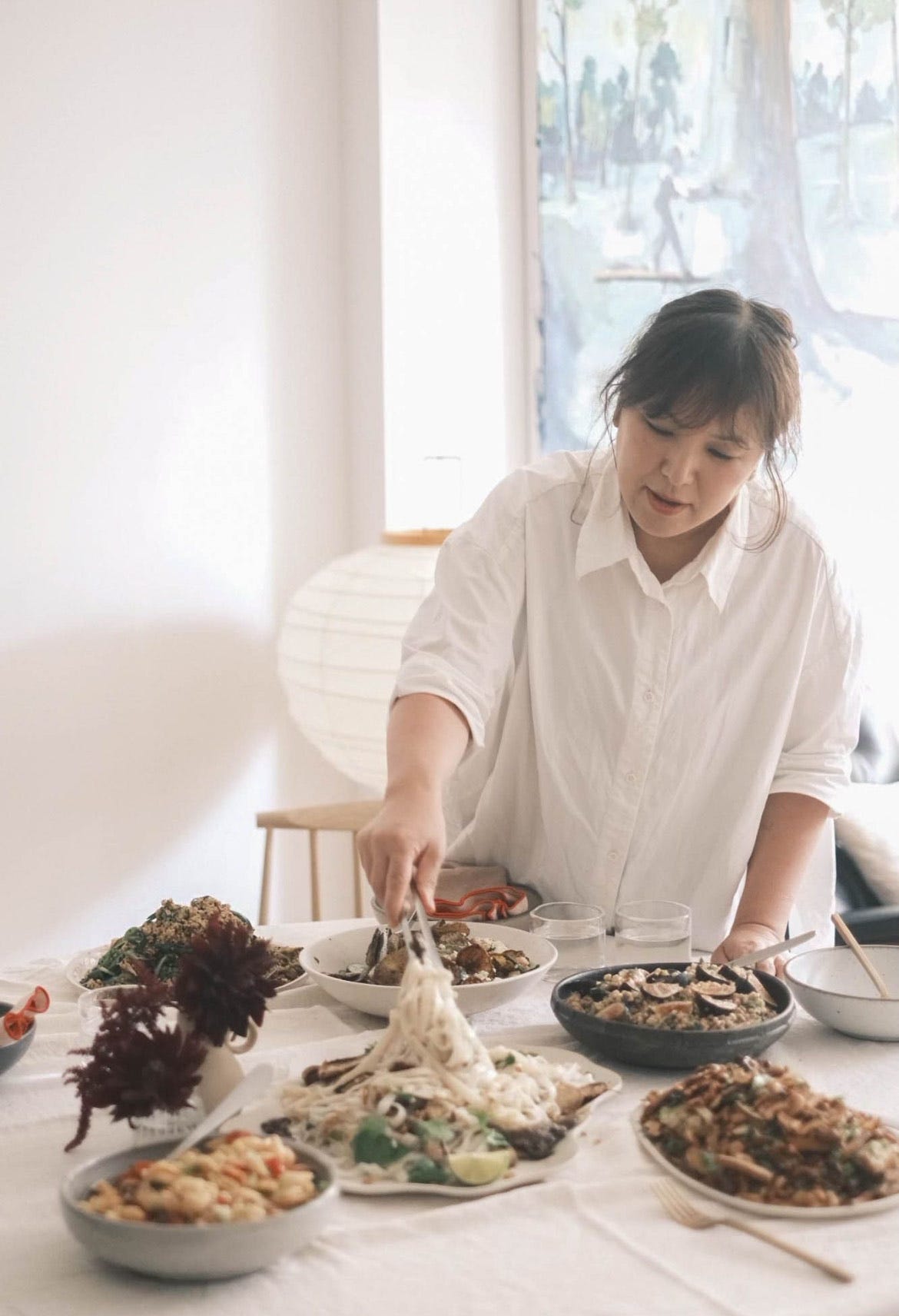
Without formal chef training, how do you continue to challenge yourself creatively?
I come from a long line of self taught cooks. My mother, a formidable home cook with deep knowledge of Cantonese techniques, told me she learnt to cook by “observing” her elders. Nowadays, I draw heavily upon the lessons of my mother’s kitchen, and even though our palates may differ slightly, her influence shapes the unbridled and generous way I approach flavor and feeding others.
For me, not having formal chef training has set me free. I don’t feel restrained by rules, conventions or preconceived notions. My knowledge of flavor comes from the perspective of an eater, so greed and hunger are often my starting points when creating new recipes.
My personality is that I am always looking to be true to myself, to be an originator rather than a follower. As such, I am most interested in developing recipes that haven’t been done before or are vegetarian takes on familiar flavors and dishes. I love to be playful with food and ingredients, to try things that may not be obvious but are simple and delicious.
When you're creating a new dish, what's usually the spark - an ingredient, a memory, a flavor profile, or something else entirely?
Honestly, all of these things. It can be the memory of a dish from my childhood, or a particular scent or texture that I’m looking to replicate, or a seasonal ingredient that I want to highlight, or a craving. These can all be startling points for a recipe.
You make such incredible and flavorful veg forward dishes. What’s one vegetarian pantry staple/secret weapon you always keep for building flavor fast?
It’s hard to cite one ingredient because I think the backbone of vegetarian cooking is the layering of flavor to build complexity. Pastes (not a sexy word haha) are excellent ways to add fast flavor to weeknight vegetable cooking. Things like curry pastes, Japanese Golden Curry paste, tomato paste, gochujang, harissa etc come packed with concentrated ingredients which have already been cooked down. There is no shame in using a store bought paste as a shortcut in vegetarian cooking. Pastes can be used as a flavor base for noodle soups, stews, pasta sauces, risottos, or tossed with vegetables before roasting. One of the simplest recipes in my book TENDERHEART is a quick yet deeply flavourful dish of snow peas stir fried with Thai curry paste - it comes together effortlessly in minutes and is so satisfying to eat with a bowl of rice.
What's one mistake you see home cooks making with vegetables or vegetarian cooking in general?
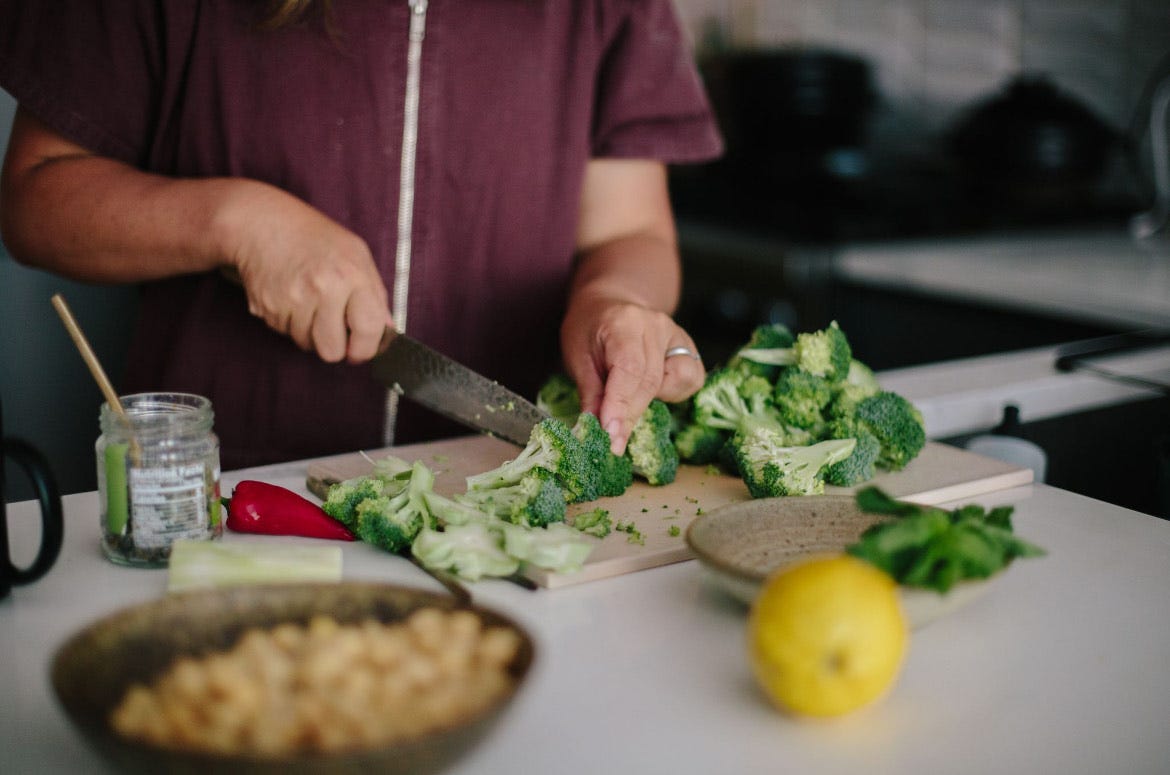
It’s a mindset. Many people underestimate vegetables. They see it as a side dish or secondary to the ‘main event’ (usually animal protein). They attach the idea that since it’s “healthy”, it’s a duty to eat it rather than a joyful choice.
I think if everyone put as much thought and care into preparing and cooking vegetables as they do for meat, then there’d be less hate and less boring vegetable dishes in the world.
I always say this: steak or chicken is not delicious if you don’t season it and cook it correctly, so don’t expect vegetables to be either. Treat vegetables and animal protein as equals.
The Recipe: Dumpling Tomato Salad With Chile Crisp Vinaigrette
Dumpling and tomatoes feels like such an unexpected but brilliant combination. What was your original inspiration for pairing them?
The original inspiration came from a dish I made during Covid actually, which was just dumplings with marinara sauce. From that dish, I saw how well dumplings pair with tomatoes.
The pairing is unexpected but just because it hasn’t been done before, doesn’t mean it can’t work!
This recipe appeared in your cookbook before going viral on NYT Cooking and TikTok. Did you expect it to resonate so widely?
Honestly I did not! In fact, I did not know that the NYT Cooking Tomato Dumpling Salad had gone so viral on TikTok until others started tagging me to let me know that other creators had claimed to have invented this dish. Apparently it is very popular in Europe LOL. I guess once a recipe is “out there”, it is very difficult to retain your intellectual property. That’s the nature of social media.
Social media is such a beast. Information is disseminated and swallowed into a black hole so it’s hard to really understand how or why a particular recipe goes viral. But I am glad that so many people love this dish so much.
What's it like watching your recipe get remixed around the world? Do you enjoy the creative takes, or do you wish people stuck closer to the original?
There are two parts to this.
Generally I’m not precious about my recipes in that I love it when people add their own twist or use what ingredients they have lying around. I like to empower home cooks with my recipes so they have the confidence to play around and make it their own. That doesn’t bother me at all.
That being said, I do think giving proper credit, even on social media, is really important and it is sad that this doesn’t feel like a priority anymore. I’ve seen this recipe replicated all over the world, without credit. It would be nice to be credited as the creator of this recipe (and NYT COOKING as the home of the recipe) because of what I mentioned earlier, that this recipe pretty much sums me up on the plate. It is a viral recipe yes, but to me it’s very personal and sometimes it feels weird to see creators sharing the salad without context. In general I’m very careful about crediting inspirations and sources - its makes the industry more connected and collaborative if we credit our sources. It’s just good manners!
Do you have favorite tomato varieties for this salad, and how do you choose the best ones at the market - especially when comparing peak season to winter cooking?
I like to use a range of tomato varieties for optimal flavor. Different varieties vary in taste which builds a more interesting salad - heirlooms are savory and juicy, sungolds are sweet and zesty, beefsteaks are heavy and robust. I don’t have a favorite variety, the beauty of this salad is that any type works!
What makes tomatoes the perfect partner for dumplings?
I think it’s the contrast - the sweet-savoury fruity juiciness of the tomatoes lightens and freshens up the dumplings. I love how salting the tomatoes draws out moisture and creates an instant ‘sauce’. Dumplings are such a crowd-pleaser and so are tomatoes, so it’s a bonus they taste so perfect together.
For your roasted winter version, does the whole mood of the dish shift along with the ingredients?
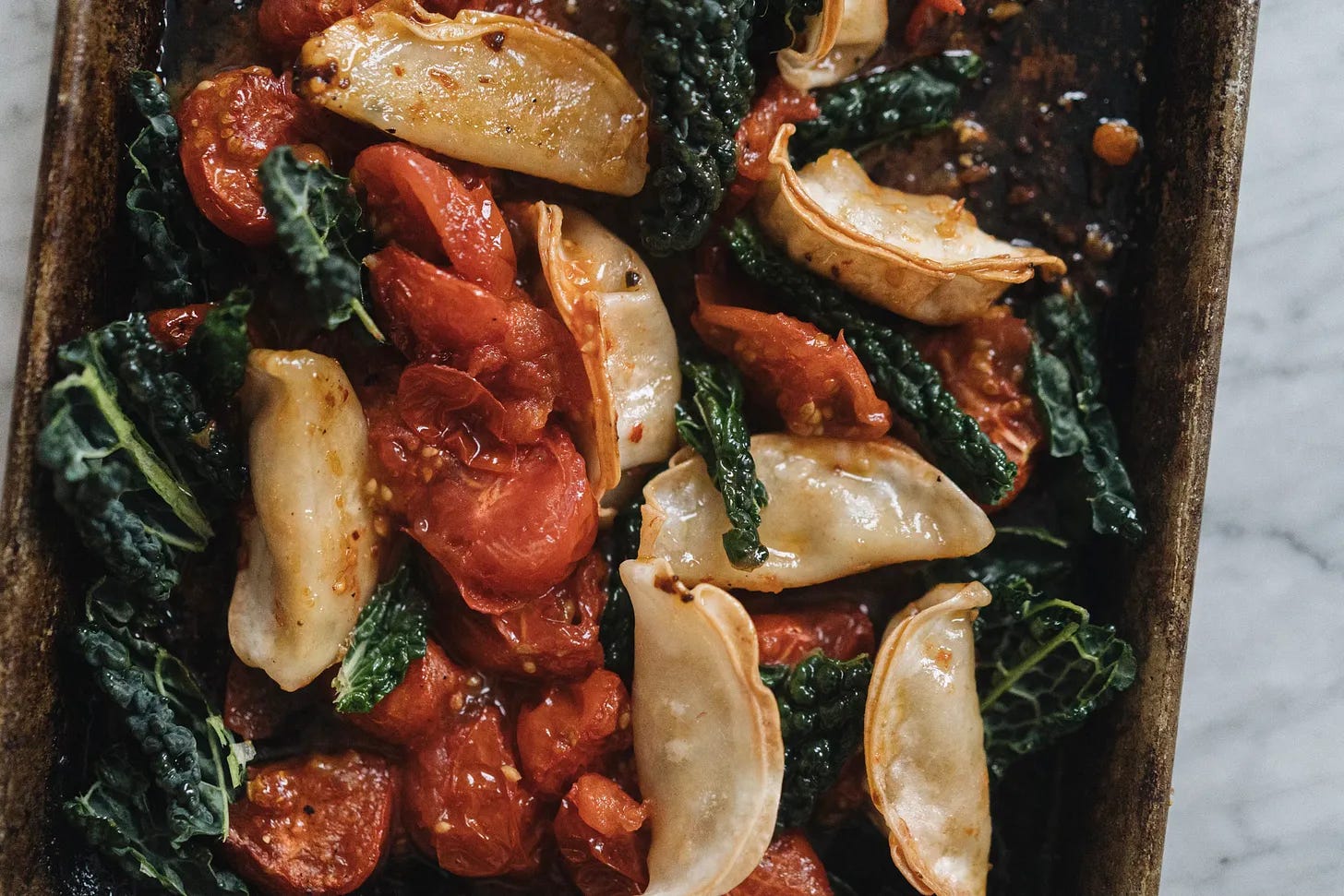
I love that you mention the winter version of this salad that I shared on my newsletter last winter! Roasted tomatoes are sweeter, more syrupy and it makes the dish feel more cozy. With this recipe, I really wanted to show that you don’t have to be restricted by the seasons if you want to eat a particular vegetable or fruit. Roasting tomatoes in the winter is perfect, it coaxes the flavor from cold storage tomatoes, while also warming the house with a beautiful tangy aroma, and, most importantly, it’s a great way to keep eating vegetables during the winter.
What's one small technique tweak that makes the biggest difference in flavor for this dish?
Definitely salting the tomatoes at the beginning which draws out its juices while also deepening the sweet and tangy tomato flavor.
Where do you draw the line between homemade and store-bought? Both here for this recipe and in general?
I have zero snobbery about using store-bought. I think whatever makes it easier for home cooks to get dinner on the table deliciously and quickly works for me!
You recommend Trader Joe's Thai Vegetable Gyoza. What makes them your pick? And do you have any advice for readers choosing a good gyoza?
They are my favorite because they have great flavor. A lot of vegetarian dumplings can be a bit bland but these TJ Thai Vegetable Gyoza are so well seasoned.
Most of the time I use potsticker style dumplings for this salad as they have a flat bottom which gets crispy. But I’ve also used other style of dumplings and they all taste great.
Chile crisp is everywhere. Do you have a favorite brand or recipe for it?


I have so many favorites. Right now, I have 3 or 4 different brands in my fridge. Fly By Jing is very reliable and a great all purpose crisp to have on hand (their Chengdu Crunch is incredible), Homiah (their vegan one has seaweed in it so it’s super umami and nut very spicy so this is a great option for those who don’t love spicy food), and Lee Kum Kee Chiu Chow Chili Oil which is deeply spicy with lots of aromatics.
I have a few chili crisp recipes, most notably the very popular Everything Oil in my book To Asia, With Love. In that same book, there’s also a chilli crisp recipe. There’s also a couple of chili crisp recipes in my book TENDERHEART.
Final thoughts
How do you balance writing recipes that work for both confident and nervous cooks?
Since I am a home cook myself, I write from that perspective, which is why most other home cooks find my recipes so easy and achievable. I am literally standing in their shoes while I’m developing recipes. I think about how a recipe FEELS to be cooked, from the flow of the steps, to what equipment is used, how I can cut down on the number of pots and pans and thereby reduce washing up! I think all of this matters in a recipe. It’s not just the ingredients and the flavor, but it is whether it feels fun and easy to cook. I have cooked plenty of yummy recipes from cookbooks but hated the process of cooking it!
For hesitant home cooks, what's the first step to confidently combining unexpected ingredients?
I think there are basics to combining new ingredients - for example, if you are making a salad dressing, instead of using everyday red or apple cider vinegar, you could try flavored vinegars like champagne or tomato to get different results. Replace olive oil with a seasoned oil like chili oil in salad dressings for a very different, spicier finish. And think about ingredients and where there are similarities. I did this Sheet pan pierogi with kimchi recipe in NYT Cooking which may sound unusual, but really all I was doing was swapping out one pickled cabbage (sauerkraut) with another (kimchi) and this simple swap gives pierogi are completely new vibe.
What's your "burnout meal" - the thing you make when you just don't feel like cooking?
Honestly, the tomato dumpling salad! That is my honest truth. In the summer, we eat this on repeat. The other one is a do-it-yourself style dinner of rice with sriracha and kewpie mayo, served with sliced avocado and cucumber, wrapped up in nori sheets. Kinda like less fancy onigiri. There’s a version of this “recipe” in the seaweed chapter of Tenderheart.
What are you most excited about with your new cookbook Linger?
First and foremost, I’m always excited for everyone to try my new recipes and to see which ones resonate most with my readers. I’m excited for everyone to expand their definition of what a salad to, and particularly for my US audience to see me flex my salad muscle (since my story salad began in Sydney). I’m excited to see upcoming holiday tables with my salads on them (hopefully!!). But my bigger picture, I’m excited for everyone to embrace eating together. I’m so ready to see people gathering over salads, to see people connecting over a table of food - this is actually what I’m most excited about.
Thank you so much to Hetty, for sharing her story, her recipes, and her rule-free approach to cooking.
Now it’s your turn:
Try the Dumpling Tomato Salad With Chile Crisp Vinaigrette, play with it, make it your own and enjoy every bite. Share your photos of it in the chat, and make sure to subscribe to Hetty’s newsletter: To Vegetables, With Love.
Here’s to cooking without pressure and discovering your new favorite dish!

My notes on the recipe:
I made my own crispy shallots but like the recipe says, store bought is more than fine, especially if you’re going for a quick dinner!
Since I had infused oil from the shallots, I used those as the oil to cook the dumplings - also totally optional but yummy.
Use firm tomatoes and a variety of colors - it looks the best.
Best eaten right away but if you have leftovers, store the dumplings separately and reheat in the air fryer - then reassemble.
A cool platter really elevates this if you’re serving it to friends.
I personally prefer a really crispy dumpling so I preferred to brown on all sides and lay them on top vs mixing them in, then drizzling the dressing over everything.
Like the recipe mentions this is so good either way with the dumplings hot or room temp!
How to make your own crispy shallots:
Thinly/evenly slice 4 shallots (I suggest a mandoline but if you’re using a knife - evenness is more important than thinness for even cooking).
Fill a small frying pan with ½ inch of neutral oil and add shallots into cold oil.
Place over medium heat and cook until golden.
Remove from oil and drain on a paper towel before seasoning with salt.
Store in an airtight container on the counter for up to 3 days.
Strain any remaining bits from the oil and use as shallot infused oil for up to 3 days (stored in fridge).
Tried this recipe? Tell me everything. What worked, what didn’t, what you’d do differently next time. Your comments = gold for everyone else here 🫶
With love from Reggie and her new persona - Brie-anna 🐕 💁🏻♀️


Wow, what a great interview, on both sides. Loved it!